
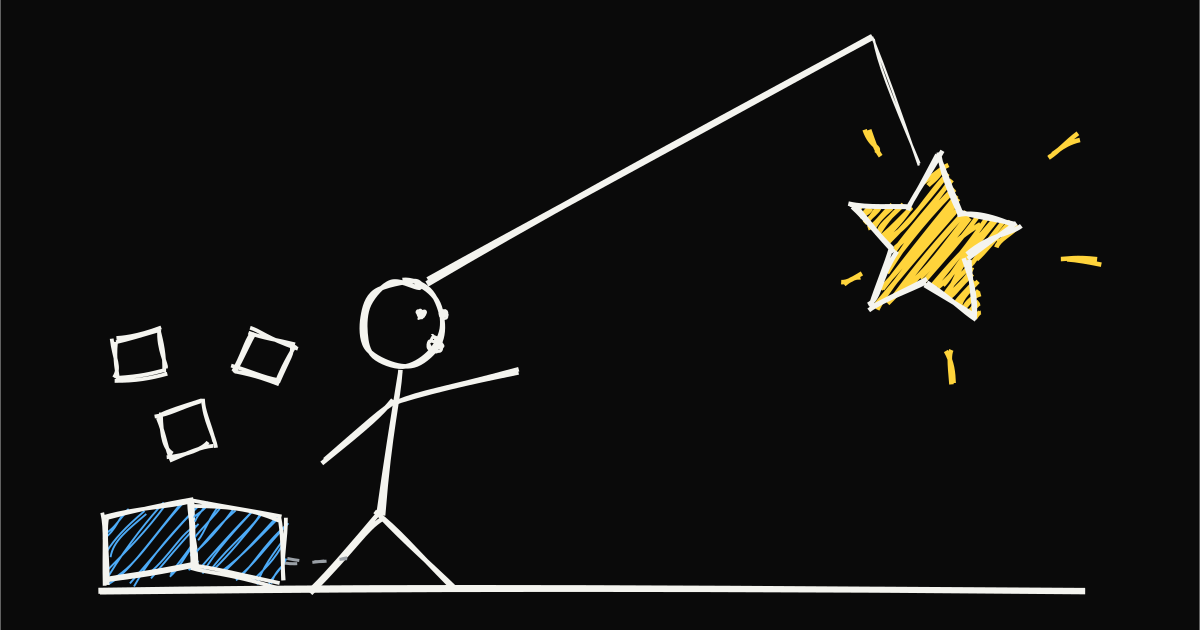
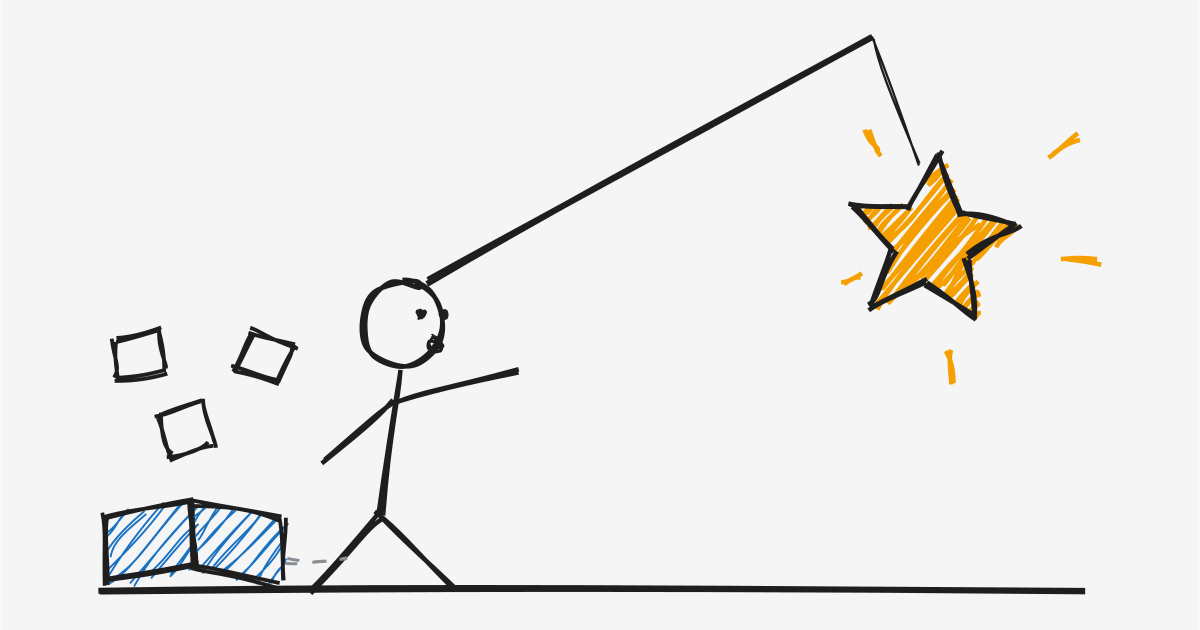
chasing points but missing the point
It’s kind of funny how millions of us will panic over an app streak expiring but won’t spend ten minutes actually practicing what we set out to learn.
I realized this after keeping a LeetCode streak going for months. My profile was full of like green squares and cool badges but the moment I faced a ad-hoc problem I’d freeze. I had been “practicing” every day but I wasn’t really getting better at problem solving. I was just getting better at keeping the streak alive.
It wasn’t a discipline issue. It was gamification doing exactly what it’s built to do.
When scores become the target
At first I couldn’t figure out how I could show up every single day and retain so little. Then I came across this idea called Goodhart’s Law.
“When a measure becomes a target, it ceases to be a good measure”
Basically the second you turn a number into the goal people start optimizing for the number and forget about whatever that number was supposed to represent and you see it everywhere once you start looking around.
- Reading challenges: People set a goal to read 50 books in a year so they quietly ditch dense books and pick up 100-page novellas or crank audiobooks to 2.5x speed.
- Habit trackers: We want to meditate for peace of mind but after a few weeks we’re sitting there making grocery lists in our head just waiting for the timer to tick down so we keep our green checkmark.
The exact same thing happened to my learning. The real goal of learning something is slow, messy and pretty much invisible. You can’t put a neat sensor on the moment an idea clicks in your head while you stare at a problem. So apps do what’s easy. They give us something simple to chase streaks, XP, leaderboards, little badges and naturally our brains do what brains do. We stop caring about the understanding and just focus on keeping the number alive.
Feeling smart vs. getting good
During that streak my daily sessions felt great. I’d open the daily problem, glance at it for a few minutes, peek at the solutions tab to see the trick, write out the code, submit, see the green “Accepted” screen with a 95% faster runtime and feel like a genius. It felt effortless and I felt smart.
Turns out psychologists have a name for this the Fluency Illusion or the Illusion of Competence. When the answer is right in front of your eyes your brain tricks you into thinking you actually know how to solve the problem. Platforms love this because any friction makes people want to close the tab. But real learning actually needs friction. Cognitive scientists call this Desirable Difficulties. When your brain has to stop, struggle a bit and dig an approach out from memory with no hints that uncomfortable effort is what actually tells your brain the pattern is worth keeping. A famous study in Science showed that passive recognition basically produces zero lasting retention compared to the gritty effort of pulling things from memory on your own. Researchers in learning design have a great name for this chocolate-covered broccoli. You take something good for you, pour cheap syrup over it and hope people eat it. But when you just slap external game mechanics onto drills people lick off the sugar and ditch the broccoli.
We don’t end up learning how to think through complex problems. We just get good at recognizing hints and copying patterns. Take the discussion tab away and our minds go completely blank.
Chasing points instead of learning
The funniest and most embarrassing part was watching my own motivation warp over time. I started out genuinely wanting to become better at solving algorithmic problems. But once the streak got long and badges got involved things got weird. If I had a busy day instead of sitting down with a tough new problem I’d just solve the easiest problem available or re-submit a solution I had already done just to keep the streak alive. I wasn’t learning anything, I was just farming green squares.
Turns out I wasn’t alone. A study looking at gamified app users over several years found that people do this constantly:
- Point farming: People openly admit to spending hours repeating basic-level drills just to rack up tens of thousands of points.
- Hating hard lessons: When platforms rolled out tougher, more useful material people actually got annoyed because hard problems slowed down how fast they earned points. As one learner put it “I was literally seeing real learning as an obstacle to my success in the game.”
- Anxiety over fake ranks: People staying up past midnight feeling stressed about slipping down a leaderboard or losing a badge.
- Rage quitting: The second a multi-year streak broke from travel or a glitch people didn’t just take a break: they quit completely.
Psychologists call this the Overjustification Effect. When you throw heavy external rewards (points, badges, leaderboards) at something you originally enjoyed for its own sake the external reward eventually crowds out the genuine curiosity. In fact when researchers tracked students across a whole semester those in a gamified course with badges and leaderboards actually ended up with lower motivation, more anxiety and lower exam scores than students in a normal classroom. Once playing the game becomes the point, learning is just in the way.
The receipt isn’t the meal
Looking back I spent months basically mistaking the receipt for the meal. We care more about logging our workout than feeling our muscles work. We skim through books just to tick off a reading challenge instead of letting the ideas sit with us. We love the green checkmark more than the habit itself. We want the feeling of making progress so badly that we happily settle for the platform telling us we’re doing great.
Letting the streak die
At some point I decided to just let the streak die. Watching it reset gave me a some anxiety for about five minutes. Then nothing bad happened and honestly a huge weight lifted. The streak didn’t run my morning anymore. I could sit with a hard problem for two hours when I had focus and take a day off when I needed to without feeling guilty.
Once I dropped the game I changed how I did things.
- Adding back some friction: If it feels effortless you’re probably just being entertained. I stopped glancing at hints and solutions and started writing out edge cases on paper first. Struggling through a problem with zero hints felt slow and clumsy at first but the patterns actually started sticking.
- Measuring ability, not screen time: I stopped caring about consecutive days or badges. The only questions that mattered were Can I solve an unseen problem without looking at solutions? Can I explain why this approach works to someone else? Can I actually build what I set out to build?
Real learning is slow, quiet and kind of unglamorous. You can’t turn it into confetti and it doesn’t fit on a leaderboard. Next time an app tries to guilt you with a notification to save your streak you can just smile and ignore it. We’re trying to learn something real, not win a game.
Close the app, open the problem and let it be a little hard.